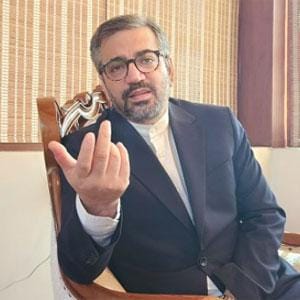
Former Northern Province Chief Minister and Tamil People's Council Secretary-General Justice C.V. Wigneswaran has sharply criticized the National People's Power (NPP) government, accusing it of acting with "more racial bias and less intellectual understanding than any other party that ruled Sri Lanka" when it comes to restoring self-governing rights to Tamils.
Wigneswaran made the remarks recently while inaugurating the Tamil People's Council headquarters on Sir Ponnambalam Ramanathan Road in Jaffna.
"This government acts with more ethnic prejudice and less intellectual clarity than any other in restoring self-rule to us, the indigenous people," the former Jaffna District MP said. "They speak of building a strong, peaceful nation, but without respecting and restoring the right to self-determination of the Tamil people — the original inhabitants of this land — they can achieve neither lasting peace nor sustainable economic growth."
Resorting to his usual rhetorical flourish, Wigneswaran described the Tamils as “the indigenous and original inhabitants of this land” — a claim that, while characteristic of his opportunistic oratory, remains open to historical debate, a political observer noted.
While criticizing the government’s approach to Tamil self-governance, Wigneswaran also acknowledged certain positive steps by the NPP administration — including efforts to prosecute those who plundered the nation, stabilize the economy, crack down on underworld gangs, and curb narcotics.
"We must acknowledge what is good while boldly pointing out what is unjust," he said.
Military Land Occupation Continues
Wigneswaran highlighted that 65,000 acres of state land in the Northern Province remain under military control, with only a small portion of private lands returned to their owners. He warned that government departments are preparing to take over additional land in the province.
"Yet, this present government seems to be operating with the same mindset as its predecessors regarding land acquisition," he said.
Calls for Constitutional Devolution
He urged the government to use its two-thirds parliamentary majority to grant collective powers to the Tamil people, arguing this is essential for Sri Lanka's stability and prosperity.
"Empowering the Tamil-speaking people of the North and East with such collective authority is the only practical and swift path to make Sri Lanka a stable, prosperous nation in Asia," Wigneswaran said. "Even without mentioning the word 'federalism,' it is possible to legally grant the North and East the right to self-determination."
He criticized the government's apparent unwillingness to conduct Provincial Council elections, which would allow limited devolution under the existing constitution.
India's Role Questioned
Wigneswaran also expressed disappointment with India’s approach to the Tamil issue, questioning New Delhi’s reluctance to pressure Sri Lanka into fully implementing the 13th Amendment or holding Provincial Council elections under the Indo-Lanka Accord.
“I do not know whether this is India’s inability or its lack of concern,” he said. “India should not miss this golden opportunity to press the present government — which holds a two-thirds majority — to implement the 13th Amendment in full. This is India’s moral duty.”
Political observers noted that what he conveniently left out was his own “spiritual detour” during an official visit to India — a trip made at New Delhi’s invitation to discuss crucial issues concerning the Tamils. During his tenure as Northern Province Chief Minister, one fine morning — much to the horror of Indian officials — C.V. Wigneswaran vanished from his hotel room. Where did the Chief Minister go? Not to a policy meeting, but to the ashram of his guru, the convicted child rapist Swami Premananda.
Observers further pointed out that when Prime Minister Narendra Modi visited Jaffna and met him personally, Wigneswaran’s letter to Modi the very next day wasn’t about Tamil rights or welfare — but a plea to release Premananda’s jailed disciples.
Historical Reconciliation Needed
Wigneswaran also called for a re-examination of Sri Lankan history, arguing that the country’s historical narrative has been distorted over time.
“Tamil professors and Sinhalese professors speak about the history of Sri Lanka in vastly different ways. The reason for this is the Mahavamsa. That text is not a historical record, yet certain Sinhalese scholars have granted it the status of one, thereby distorting our nation’s history,” he said.
“International historians, along with an Indian scholar and Sri Lankan professors from the Sinhalese, Tamil, and Muslim communities, should come together to write a new, balanced history of Sri Lanka — a project that should be supported by a UN body such as UNESCO,” Wigneswaran added.